Lactose Reduction as a Capacity Lever in Whey Ingredient Plants | Seraflux
How dairy whey processors can use lactose reduction to improve conversion consistency, viscosity control, membrane performance, and downstream capacity.
Request pricing How dairy whey processors can use lactose reduction to improve conversion consistency, viscosity control, membrane performance, and downstream capacity.
Request pricingFor a dairy whey processor, lactose reduction is often treated as a specification step. In practice, it can be a capacity lever.
When lactose remains high or variable, it can influence crystallization behavior, viscosity, membrane pressure, evaporation load, drying stability, and finished ingredient consistency. The result is familiar to plant teams: slower flow, longer holds, more intervention, and a narrower operating window.
Seraflux supports whey processors that want lactose hydrolysis to do more than meet a label claim. The objective is controlled conversion that fits the plant, protects sensory quality, and supports throughput.
In whey ingredient production, lactose affects how the stream behaves across the line. It can shape solids handling, heat transfer, filtration behavior, and powder performance. The same lactose target can also behave differently depending on feed source, protein level, mineral load, pH, temperature window, and residence time.
That is why enzyme selection cannot be separated from process conditions.
A practical lactose reduction program should answer four questions:
For teams searching for an enzyme supplier for whey processing, the useful conversation starts there: not with a generic enzyme recommendation, but with the process role lactose reduction needs to play.
Whey plants rarely lose capacity in one dramatic step. Capacity is usually absorbed by small frictions across the line.
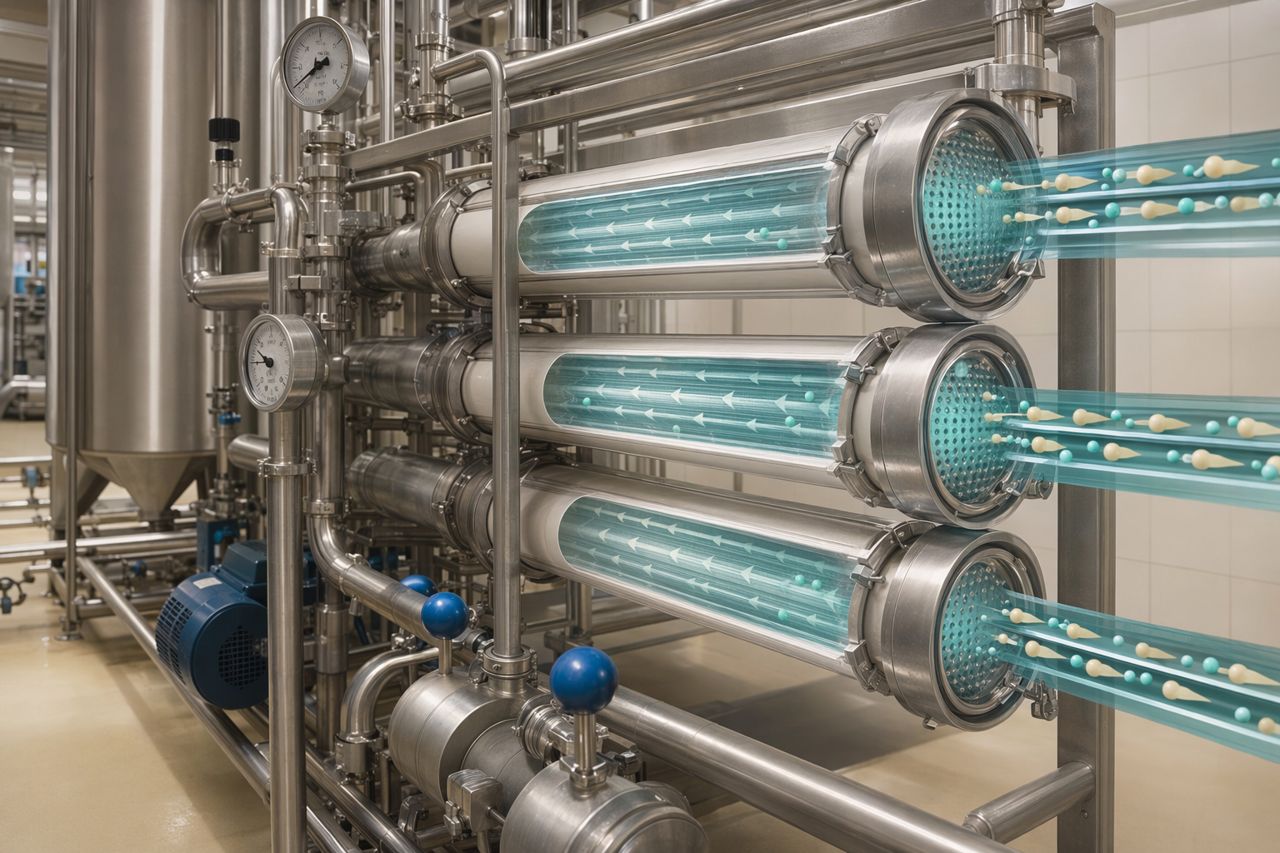
Variable lactose and solids behavior can contribute to uneven flow through filtration and concentration steps. When the stream becomes harder to manage, operators may compensate by reducing throughput, extending recirculation, or cleaning earlier than planned.
A well-positioned lactase step can help create a more predictable carbohydrate profile before downstream concentration, depending on the process layout and product target.
As whey streams concentrate, viscosity and heat transfer become central operating concerns. Lactose hydrolysis changes the sugar profile, which can influence how the stream handles under concentration. The aim is not simply more hydrolysis. The aim is the right level of hydrolysis at the right point in the line, so the evaporator and dryer see a more controlled feed.
Powder performance is where small upstream differences can become visible. Lactose state, residual moisture targets, hygroscopicity, sweetness, and flow characteristics all matter. For hydrolyzed whey ingredients, enzyme treatment must be planned with the finished powder in mind, not only the liquid stream.
For whey streams routed into fermentation, lactose reduction can improve substrate accessibility where the downstream culture or organism benefits from glucose and galactose availability. The value is operational: a more suitable feed profile, fewer batch surprises, and a clearer path from whey sidestream to usable input.
Lactase performance depends on the conditions around it. Feed composition, pH, temperature, solids, contact time, and hygiene constraints all determine whether an enzyme program is practical at plant scale.
Seraflux evaluates enzyme fit around the operating window already available in the plant. We focus on:
This is where technical support matters. A plant-ready enzyme solution should reduce uncertainty, not create a new operating burden.
Lactose reduction can support capacity when it helps the plant run with fewer corrections. The strongest gains often come from repeatability rather than a single headline metric.
A well-designed program may help teams achieve:
The value is not only biochemical. It is operational.
Not every lactase is suited to every whey stream. A supplier should understand the differences between liquid hydrolysis, concentrated streams, permeate applications, ingredient-grade requirements, and downstream stability expectations.
Seraflux works with whey processors to define the application before recommending the enzyme approach. That includes understanding the current bottleneck, the desired conversion range, the process location, and the practical limits of the line.
A useful evaluation plan typically includes:
Process mapping
Identify where lactose reduction can create the greatest operational benefit without adding avoidable complexity.
Feed assessment
Review solids, protein, mineral profile, pH range, temperature window, and variability between incoming streams.
Conversion target setting
Define what level of lactose reduction is required for the product, process, or customer specification.
Pilot or plant trial design
Establish a dosing and contact-time plan that reflects real production conditions.
Downstream review
Check how the treated stream behaves through concentration, drying, blending, or fermentation.
Scale-up support
Convert trial learning into a repeatable operating procedure for production teams.
Your plant may benefit from a closer review if you are seeing:
In these situations, lactose reduction is not only a formulation decision. It is a way to manage flow, conversion, and downstream reliability.
Seraflux supplies enzyme solutions for industrial whey processing with a focus on process fit. We help teams select and implement lactase programs for hydrolyzed whey, permeate applications, specialty dairy ingredients, fermentation-ready streams, and related whey-based production.
Our role is direct: understand the plant conditions, recommend a practical enzyme path, support trials, and help operators move from test results to repeatable production.
If lactose reduction is becoming a bottleneck, a quality variable, or a customer requirement, the next step is a focused technical discussion.
Request a quote through the on-site form and tell Seraflux what whey stream, conversion target, and process constraints you are working with.
Tell us your application and volume — we reply with pricing and lead time.