Membrane Filtration, Enzymatic Conversion, and the New Whey Plant Flow Sheet
Whey processing has moved beyond simple concentration. Today, plants are asked to recover more value from variable whey streams, protect membrane capacity, control viscosity, and hit tighter finished-product targets without disrupting existing equipment.
That is where membrane filtration and enzymatic conversion need to be designed as one operating strategy, not two separate process steps.
Seraflux works as an enzyme supplier for whey processing teams that need practical enzyme guidance tied to real plant constraints: feed variability, temperature windows, residence time, membrane behavior, sensory impact, cleaning schedules, and commercial conversion targets.
The whey plant flow sheet is becoming more integrated
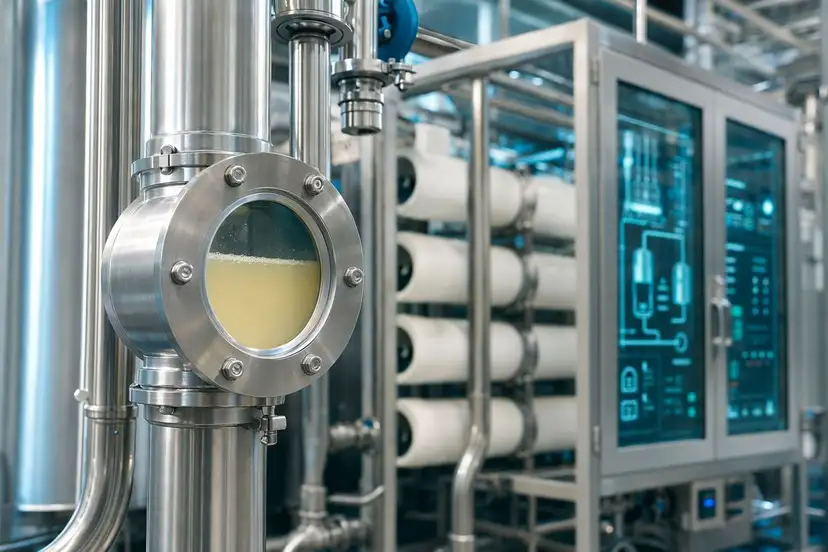
A modern whey line may combine clarification, microfiltration, ultrafiltration, nanofiltration, reverse osmosis, evaporation, crystallization, drying, and enzymatic conversion. Each step changes the next.
When enzymes are added without considering membrane load, mineral balance, protein concentration, or downstream heat exposure, the result can be unstable performance. When enzyme selection is planned around the full flow sheet, processors can improve control over:
- Lactose conversion before further concentration
- Permeate value and downstream ingredient options
- Viscosity during concentration and holding
- Membrane pressure trends and throughput stability
- Sweetness profile and sensory consistency
- Crystallization behavior and powder quality
- Batch-to-batch repeatability across seasonal milk variation
The goal is not simply to add an enzyme. The goal is to place the right conversion step where it helps the whole plant run better.
Why membrane filtration changes enzyme decisions
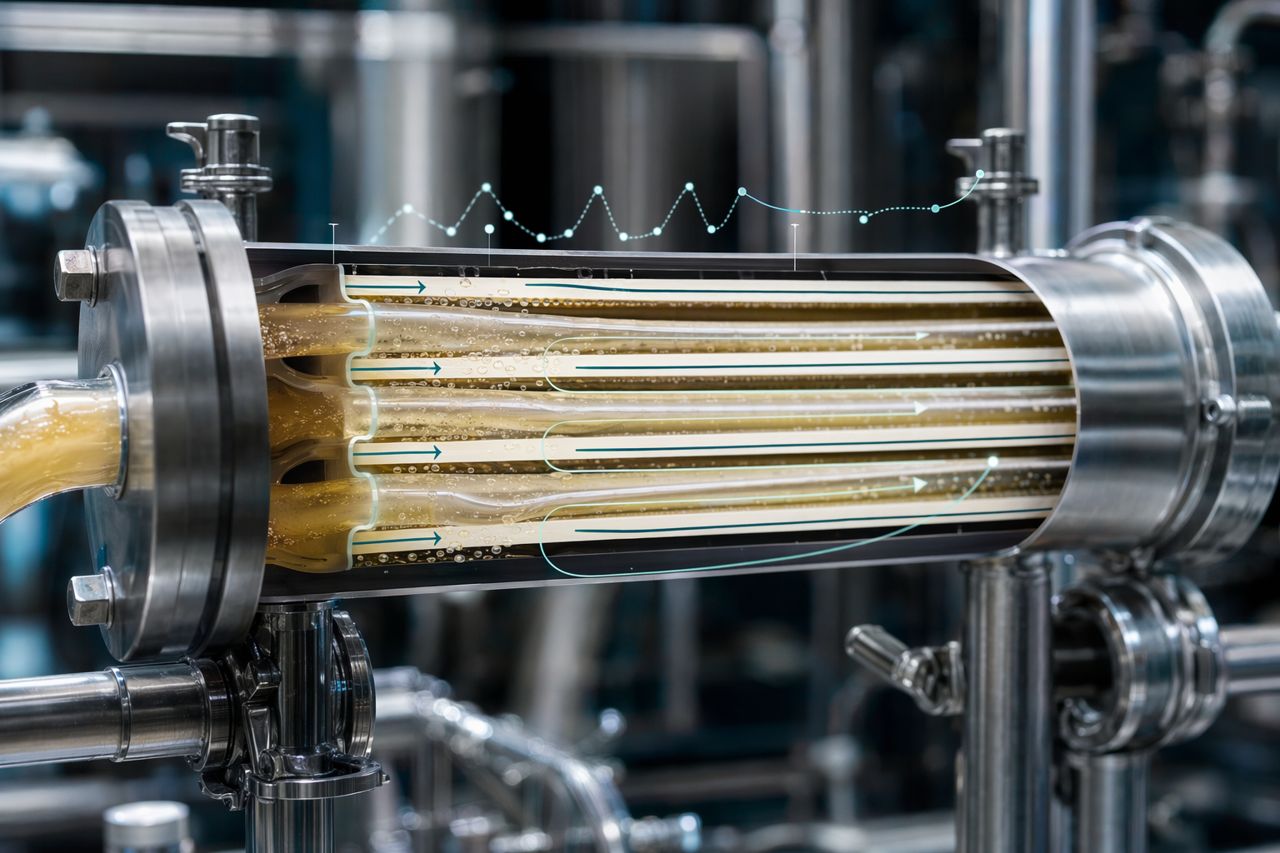
Membrane systems concentrate, separate, and standardize whey components. They also change the process environment for enzymes.
A stream that performs well before ultrafiltration may behave differently after protein concentration. A permeate stream may offer a cleaner lactose conversion opportunity, but residence time, mineral content, and downstream heat treatment still matter. Nanofiltration and reverse osmosis can improve solids management, but they may also increase viscosity and reduce mixing efficiency.
For plant teams, the key questions are operational:
- Should conversion occur before or after membrane concentration?
- Is the target stream sweet whey, acid whey, permeate, retentate, or a standardized blend?
- How much conversion is commercially necessary, not theoretically possible?
- Will the enzyme step affect membrane fouling, cleaning frequency, or thermal load?
- Can the process hold the required conditions without creating a bottleneck?
- Does the final sensory profile fit the ingredient specification?
Seraflux helps processors evaluate these tradeoffs before committing to a new enzyme program.
Lactose conversion is a flow sheet decision
Lactose hydrolysis is often discussed as a formulation step, but in whey processing it is also a plant capacity decision.
Controlled conversion can support several commercial outcomes:
- Reduced lactose content in selected whey-derived products
- Improved sweetness without adding external sweeteners
- Better solubility behavior in certain applications
- Reduced risk of lactose crystallization where it is undesirable
- Improved handling of high-solids streams
- Increased flexibility for permeate utilization
The conversion target should match the product plan. A sports nutrition base, infant nutrition ingredient, fermented application, beverage base, and permeate-derived sweetener system may each need a different process position and conversion profile.
Seraflux supports target-setting around the customer specification, not a generic enzyme recommendation.
Viscosity control matters as solids increase
As whey streams concentrate, viscosity becomes a limiting factor. Higher viscosity affects heat transfer, pump load, mixing uniformity, membrane flux, hold-tank turnover, and dryer feed behavior.
Enzymatic conversion can help processors manage some of these constraints, especially when the process is designed around solids level, hold time, pH range, and downstream concentration. The benefit is not only chemical conversion. It is smoother operation.
A practical enzyme program should answer:
- Where does viscosity begin to restrict throughput?
- Is the restriction happening before evaporation, before drying, or during intermediate storage?
- Does conversion improve flow behavior enough to justify the added step?
- Can the plant maintain uniform contact between enzyme and substrate?
- Will the converted stream stay within sensory and labeling requirements?
For whey processors, these answers are more useful than lab-only performance claims.
Protecting membrane performance
Membrane performance is one of the highest-value operating concerns in a whey plant. Even small shifts in pressure, flux, fouling tendency, and cleaning frequency can affect production planning.
Enzymes can support downstream value creation, but they should not create membrane uncertainty. Seraflux evaluates enzyme use in relation to membrane placement, feed quality, thermal history, and cleaning strategy.
Areas to review include:
- Whether enzyme addition should occur upstream or downstream of a membrane step
- How conversion changes osmotic behavior and concentration limits
- Whether the converted stream changes fouling risk or cleaning demand
- How the enzyme step fits into existing batch or continuous operation
- How to avoid over-processing when the commercial target is already met
The best enzyme program is one the production team can run consistently.
Sweet whey, acid whey, and permeate are not the same process
Whey source matters. Sweet whey, acid whey, and whey permeate differ in pH, mineral profile, solids composition, protein content, and downstream use. Those differences shape enzyme selection and process setup.
For sweet whey processors, the priority may be preserving protein functionality while optimizing lactose conversion and concentration. For acid whey processors, mineral load, pH adjustment, and sensory control can be more prominent. For permeate processors, conversion can support ingredient value, sweetness management, and crystallization behavior.
Seraflux does not treat whey as one generic stream. We start with the plant reality.
Where enzymatic conversion can fit
Common integration points include:
Before concentration
Adding enzyme before major concentration can support mixing and conversion uniformity. It may be useful when the stream is easier to handle at lower solids. The tradeoff is that larger liquid volumes may require more tank capacity and longer scheduling windows.
After ultrafiltration
Conversion after ultrafiltration can focus on retentate or permeate streams depending on the product goal. This can improve targeting, but the changed solids profile may affect viscosity and contact efficiency.
After nanofiltration or reverse osmosis
Later-stage conversion may reduce volume and focus treatment on a higher-value stream. The tradeoff is greater attention to viscosity, mixing, and process hold conditions.
Before evaporation or drying
This position can help align conversion with final solids and powder targets. It requires careful review of thermal exposure, residence time, and the finished sensory profile.
There is no universal best point. There is only the point that fits the product, equipment, schedule, and commercial target.
What Seraflux brings to whey processors
Seraflux supports enzyme programs for whey processors with practical technical collaboration from evaluation through scale-up.
We help with:
- Enzyme selection for target whey stream and product goal
- Process-position review across membrane and thermal steps
- Conversion target alignment with commercial specification
- Viscosity and handling considerations at plant solids levels
- Sensory impact review, including sweetness and clean profile
- Scale-up planning from pilot trial to production batch
- Documentation support for purchasing and quality teams
- Troubleshooting when conversion, throughput, or consistency changes
Our role is to make enzyme use easier to run, easier to justify, and easier to repeat.
Practical buying criteria for a whey enzyme supplier
When selecting an enzyme supplier for whey processing, procurement and technical teams should look beyond price per kilogram. The more useful question is whether the supplier can help the plant achieve a reliable process outcome.
Key criteria include:
- Fit with the specific whey stream and product application
- Clear recommended operating window without unnecessary complexity
- Support for membrane-aware process integration
- Consistent supply and responsive technical communication
- Practical guidance for trials, scale-up, and troubleshooting
- Awareness of sensory, viscosity, and throughput tradeoffs
- Documentation that supports internal approval and customer requirements
A lower-cost enzyme that creates process uncertainty can become expensive quickly. A well-matched enzyme program should reduce rework, protect throughput, and support finished-product consistency.
A cleaner path to higher-value whey ingredients
The new whey plant flow sheet is not just about adding more equipment. It is about making separation, conversion, concentration, and drying work as one controlled system.
When membrane filtration and enzymatic conversion are planned together, processors can create more flexible whey ingredients, improve plant handling, and reduce avoidable variability.
Seraflux helps whey processors build enzyme programs that fit the line, the operator, and the commercial target.
Request a quote
Planning a whey conversion trial, membrane-integrated process change, or new ingredient specification?
Request a quote through the Seraflux on-site form and share your whey stream type, process position, target conversion, solids range, and finished-product goal. We will respond with a practical enzyme recommendation and next-step technical support.